Adopting Wabi Sabi Interior Design Aesthetics for Retail & Office Workspaces
Key Takeaways
- Wabi Sabi interiors focus on emotional calmness rather than visual perfection. Instead of relying on excessive decoration or polished symmetry, Wabi Sabi spaces create warmth through restraint, texture, and natural imperfection. The atmosphere often feels quieter and more grounded.
- Natural materials shape the sensory experience of a space. Wood grain, stone textures, linen fabrics, and matte finishes contribute subtle depth that changes throughout the day with light and shadow.
- Minimalism does not have to feel cold or empty. Wabi Sabi interior design introduces softness into minimalist interior design through layered textures, earthy colours, and more tactile materials.
- Lighting plays a major role within Wabi Sabi interiors. Soft illumination, shadow depth, and natural daylight often become part of the overall composition rather than functioning only as practical lighting solutions.
- Retail and office spaces benefit from visual breathing room. Calmer interiors can improve how people emotionally experience commercial spaces, particularly in compact Singapore environments where overstimulation can become visually tiring.
Introduction
While some interiors manage to create an unforgettable impression because of their striking visual effects, there are those that manage to make an impression by virtue of being tranquil, harmonious, and pleasantly relaxing. Interiors that are created using natural textures, moderate styles, and variations in materials tend to create a stronger emotional ambiance than those interiors that contain lots of detailing.
Such interiors have become very common in retail and office spaces in an attempt to create a warmer environment without making things look too cluttered and busy. In the Leesman Workplace Why Report 2025, it was noted that 70% of corporate real estate owners mentioned that the offices were designed to encourage collaboration and exchange of information while 73% of the employees mentioned that the place encourages exchange of ideas and information. It is evident from the reports about how important atmosphere, comfort, and environmental experiences affect interactions in commercial areas.
In the case of Singapore interiors where limited space and crowdedness pose challenges, soft textures, moderation, and balanced designs can help create a pleasant ambiance. This blog explores how Wabi Sabi interior design principles shape calmer and more balanced retail and office environments.
What Wabi Sabi Interior Design Means?

The wabi-sabi interior design is drawn from the Japanese philosophy which emphasises imperfection, impermanence, and simplicity. Wabi Sabi interiors tend to be honest, hands-on, and emotionally satisfying rather than excessively pristine.
The focus is not on emptiness alone. Instead, Wabi Sabi interiors embrace:
- Natural variation
- Organic materials
- Restrained styling
- Visual softness
- Subtle irregularities
A rough texture of walls, an imperfection of wood grain, or the irregularity of ceramics can all be factors adding value to the design without making it overtly decorative.
Unlike other interior designs that rely heavily on visual impacts, a wabi-sabi interior design will most likely produce an ambiance that feels serene and needs more time to be noticed. It is achieved not by means of stylistic techniques, but with help of material, proportions, and balanced senses.
Continue Reading : Innovative Industrial Interior Design Ideas to Transform Modern Office Spaces
Why Imperfection Often Creates Warmth?
Highly polished interiors sometimes appear visually impressive yet emotionally distant. Excessively perfect symmetry, glossy surfaces, and rigid styling may create spaces that feel controlled rather than comfortable.
Wabi Sabi interior design introduces warmth through subtle irregularity. Materials are appreciated for:
- Grain variation
- Texture depth
- Tonal inconsistency
- Ageing character
- Handcrafted qualities
These imperfections create softness because the eye experiences the environment more naturally.
For instance, matte plaster walls tend to evoke a sense of calmness compared to shiny wall paint that reflects bright light harshly around the entire room.
Such interaction between imperfect objects and their ability to create a feeling of comfort can be used to explain why spaces within commercial buildings that use Wabi Sabi designs appear more earthy and not unfinished.
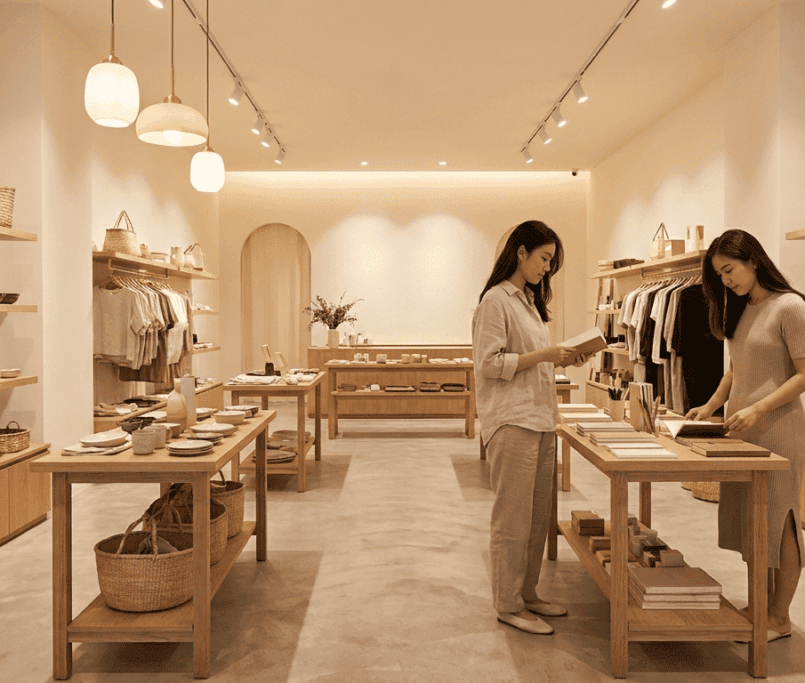
Wabi Sabi in Retail Interiors

Retail spaces frequently compete for attention visually. Bright displays, heavy branding, and dense visual layering may initially appear energetic, yet they can also become exhausting over longer periods. Wabi Sabi-inspired retail interiors approach the atmosphere differently.
Instead of overwhelming customers visually, these spaces often introduce:
- Muted earthy palettes
- Natural timber
- Tactile finishes
- Softer lighting
- Uncluttered layouts
- Quieter product presentation
This creates more visual breathing room throughout the store.In boutiques, coffee shops, wellness boutiques, and lifestyle boutiques, the slowed down sensory experience promotes a longer stay inside the setting. In interior design in Singapore, where there is little space for expansion, restraint in decoration could also help in making the store appear more comfortable and roomy.
As far as contemporary interior design styles go, the Wabi Sabi style stands out since it focuses on atmosphere over extravagance.
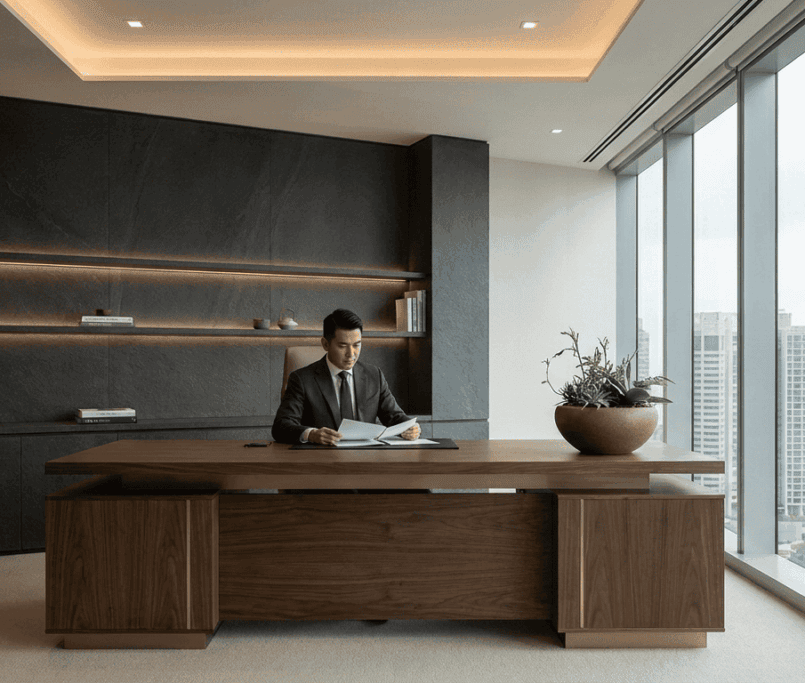
Calmer Office Environments Through Restraint
Office interiors recognise the relationship between visual atmosphere and workplace comfort. Bright white surfaces, reflective materials, and overly rigid layouts can sometimes contribute to visual fatigue, particularly in environments involving prolonged screen use.
Wabi Sabi office interiors introduce balance through:
- Softer textures
- Natural materials
- Muted palettes
- Indirect lighting
- Uncluttered circulation
- Layered simplicity
Rather than removing personality entirely, the space feels quieter and more breathable. Minimalist interior design often risks appearing cold when restraint becomes too clinical. Wabi Sabi aesthetics soften minimalism by introducing warmth through tactile surfaces and imperfect material expression.
This becomes especially valuable in Singapore offices where compact floor plans benefit from calmer visual composition to reduce spatial heaviness. A thoughtfully restrained office frequently feels more emotionally sustainable over long working hours than interiors relying on constant visual stimulation.
Materials Commonly Associated With Wabi Sabi Interiors
Materiality sits at the centre of Wabi Sabi interior design. The emphasis usually falls on materials that age naturally and reveal texture honestly over time.
These may include:
- Natural wood
- Limestone
- Travertine
- Linen
- Clay finishes
- Textured plaster
- Handmade ceramics
- Matte stone
Rather than concealing irregularities, these materials often celebrate them subtly. Timber knots, tonal inconsistencies, and raw textures contribute depth without requiring additional ornamentation. Lighting also interacts differently with these surfaces.
The matte finish diffuses light softly while a rough surface texture produces a series of shadows through the day. There are various types of interior designs but Wabi Sabi has a distinctive physical quality since materials can be touched both visually and emotionally rather than simply decoratively.
Lighting and Shadow Within Wabi Sabi Spaces

Lighting in Wabi Sabi interiors tends to feel softer and more atmospheric than aggressively bright. Indirect lighting, concealed fixtures, warm illumination, and natural daylight usually contribute more effectively than harsh overhead brightness.
Shadow becomes part of the composition itself. Instead of eliminating every dark corner, Wabi Sabi spaces often allow subtle tonal variation and depth to remain visible.
This creates:
- Softness
- Calmness
- Spatial layering
- Visual quietness
Textured walls, timber grain, and natural stone surfaces become more expressive under gentle lighting because the shadows reveal material depth gradually. Retail and office interiors adopting this approach frequently feel calmer emotionally despite minimal decorative complexity.
The relationship between light and texture therefore becomes more important than decorative quantity alone.
Minimalism vs. Emptiness
Minimalist interior design is often misunderstood as emptiness. True restraint does not remove personality from a space. Instead, it edits unnecessary visual noise so materials, light, and proportion become more noticeable.
Wabi Sabi interiors avoid sterility by introducing:
- Layered textures
- Organic forms
- Tactile contrast
- Warmer tones
- Natural imperfection
This distinction matters because spaces that feel emotionally cold rarely support long-term comfort successfully. Commercial interiors particularly benefit from balanced restraint. Customers and employees may respond more positively to environments that feel composed yet emotionally approachable.
Among different interior design themes, Wabi Sabi creates simplicity without making spaces feel overly controlled or visually rigid.
Why Quieter Interiors Often Feel More Memorable?
Interior noise levels may be lower in Wabi Sabi interiors, which enable occupants to concentrate on goods, working, or the atmosphere around them. Not every memorable space depends on dramatic architecture or highly decorative styling.
Some environments remain memorable because they create emotional ease through:
- Proportion
- Calm lighting
- Texture balance
- Visual restraint
- Spatial openness
Retail stores benefit from quieter atmospheres in that it allows customers to browse at their own pace, while offices would experience less visual fatigue.
It is no longer just a case of Wabi Sabi being a decorative style; rather, its focus is on creating emotionally balanced interiors that do not seem artificial.
Traditional Minimalist Interiors vs. Wabi Sabi Interior Design
The table below compares traditional minimalist interiors with Wabi Sabi design, highlighting how each approach differs in atmosphere, materials, and overall aesthetic philosophy.
View Related Article : A Complete Guide to Different Types of Light for Your Offices
| Element | Traditional Minimalism | Wabi Sabi Interior Design |
| Visual Atmosphere | Clean and structured | Warm and organic |
| Material Choices | Smooth and refined | Textured and natural |
| Colour Palette | Monochromatic | Earthy and muted |
| Emotional Feeling | Controlled and polished | Calm and grounded |
| Styling Approach | Highly restrained | Softly imperfect |
| Spatial Experience | Crisp and minimal | Relaxed and breathable |
Conclusion
In Wabi Sabi Interior Design, texture, simplicity, nature, and the well-being of people can be used to develop a restrained attitude to commercial interiors. Rather than relying on the aesthetics of visual beauty, commercial interior designs incorporate imperfection to create an ambience. In the process, the interior becomes more calm and more comfortable.
Commercial spaces in Singapore that seek a more sophisticated attitude towards spatial identity, a better choice of materials, as well as proper lighting and spatial arrangement, tend to influence the atmosphere rather than mere interior decoration.
Cactus Art has been crafting office, retail, F&B, commercial, and residential interiors across Singapore with a design philosophy focused on people, comfort, and distinct visual character. With 30+ years of industry experience, their team manages every part of the renovation, from pre‑design planning, conceptual development, detailed drawings, project coordination, to construction supervision.
We’ve been recognised with 2 awards, Successful Entrepreneur 2010 and Singapore Brands 2011, plus bizSAFE Level 3 accreditation, ensuring interiors that balance practicality, warmth, and refined aesthetics.
If you’re planning a new office, retail outlet, F&B concept, or commercial renovation in Singapore, speak with Cactus Art today and see how 30+ years of design and build experience can add warmth, depth, and personality to your space.
FAQs

- What is Wabi Sabi interior design?
Wabi Sabi interior design is a Japanese-inspired design philosophy focused on natural materials, restrained styling, imperfection, and emotional calmness within spaces.
- How is Wabi Sabi different from minimalist interior design?
Minimalist interior design often focuses on clean simplicity, while Wabi Sabi introduces warmth through texture, organic materials, and softer imperfections.
- Does Wabi Sabi work well in office interiors?
Yes. Wabi Sabi aesthetics can help office interiors feel calmer and less visually overwhelming through softer materials, balanced lighting, and uncluttered layouts.
- What materials are commonly used in Wabi Sabi interiors?
Natural wood, stone, textured plaster, linen, clay finishes, and matte surfaces are commonly associated with Wabi Sabi-inspired spaces.
- Why do quieter interior styles feel more comfortable?
Quieter interior styles often reduce visual overstimulation, allowing people to experience spaces more calmly and comfortably over longer periods.